全國熱線服務:
新聞資訊 Top label
- Precision Honed Tubes: The Backbone of Modern Hydraulic Systems
- Revolutionizing Building Maintenance: The Essential Guide to Modern Building Maintenance Units
- The Essential Guide to Hollow Shafts in Modern Mechanical Systems
- The Essential Guide to Cylinder Barrel Technology: Applications, Specifications, and Industry Standards
- The Complete Guide to Welded Ductwork: Industrial Applications and Technical Specifications
- The Essential Guide to Pressure Sensors: Technology, Specifications, and Industrial Applications
How to improve the finish of honing tubes
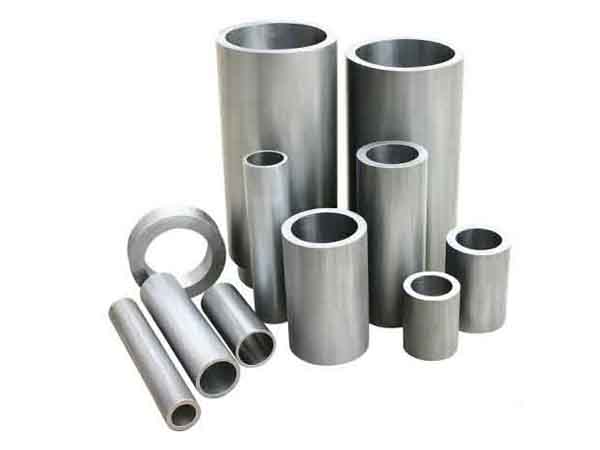
A kind of steel pipe obtained by honing process is called honing pipe. In the honing process of honing pipes, it is relatively common to use honing tools, and one of the more commonly used ones is the honing gear.
Honing gears are composed of a base body and abrasives. Using it for honing is mainly to clean impurities and burrs on the surface of the material, thereby improving the surface finish. However, when we use this kind of honing tool, we also need to pay attention to the following points:
1. The stroke of the equipment should not exceed the width range during honing, otherwise, the honing gear may be seriously damaged.
2. When controlling the honing amount, its value should be controlled within a reasonable range. The same requirements apply to the control of honing time. It is recommended to be about two minutes.
3. Since the material of the honing gear is relatively brittle, it is strictly prohibited to knock it to avoid damage and rendering it unusable.
About how to improveHoning tubeIt is not difficult to achieve the problem of surface finish, because we can start with the honing process and then achieve it. Furthermore, by selecting a suitable honing stone and controlling the roughness so that it is within the normal allowable range, the above requirements can be achieved. However, in some cases, it is still necessary to pay attention to the material used for the honing tube and the hardness of the material, so that comprehensive considerations can be taken to avoid problems.
I hope everyone can benefit from this brief introduction to the honing tube honing tool and the guidance on its smoothness, and learn more about the product. At the same time, these are also the theoretical basis for our future research work.